https://charityflopchristening.com/yk227ru9ph?key=c684a6015e0e81159ef778db1e866f4d

Tuesday, October 17, 2023

What are Fats?


What are Fats?


Fats are a sort of supplement that you get from your eating routine. It is fundamental to eat a few fats, however it is likewise unsafe to eat excessively.


The fats you eat give your body energy that it needs to appropriately work. During exercise, your body utilizes calories from sugars you have eaten. Be that as it may, following 20 minutes, practice relies somewhat upon calories from fat to make a big difference for you.


You likewise need fat to keep your skin and hair sound and assist you with retaining nutrients A, D, E, and K, which are called fat-solvent nutrients. Fat additionally fills your fat cells and protects your body to assist with keeping you warm.


The fats your body gets from your food give your body fundamental unsaturated fats called linoleic and linolenic corrosive. They are classified "fundamental" on the grounds that your body can't make them itself, or work without them. Your body needs them for mental health, controlling aggravation, and blood coagulating.


Fat has 9 calories for every gram, multiple times the quantity of calories in starches and protein, which each have 4 calories for each gram.


All fats are comprised of soaked and unsaturated fats. Fats are called soaked or unsaturated relying upon the amount of each kind of unsaturated fat they contain.


Kinds of fat

Immersed fats raise your LDL (terrible) cholesterol level. A high LDL cholesterol level endangers you for cardiovascular failure, stroke, and other significant medical conditions. You ought to stay away from or limit food sources that are high in soaked fats.


Keep immersed fats to under 6% of your complete everyday calories.

Food varieties with a great deal of immersed fats are creature items, for example, spread, cheddar, entire milk, frozen yogurt, cream, and greasy meats.

A few vegetable oils, like coconut, endlessly palm piece oil, likewise contain soaked fats. These fats are strong at room temperature.

An eating routine high in soaked fat increments cholesterol development in your corridors (veins). Cholesterol is a delicate, waxy substance that can cause obstructed, or impeded, supply routes.

Eating unsaturated fats rather than immersed fats can assist with bringing down your LDL cholesterol. Most vegetable oils that are fluid at room temperature have unsaturated fats. There are two sorts of unsaturated fats:


Monounsaturated fats, which incorporate olive and canola oil

Polyunsaturated fats, which incorporate safflower, sunflower, corn, and soy oil

Trans unsaturated fats are undesirable fats that structure when vegetable oil goes through a cycle called hydrogenation. This leads the fat to solidify and become strong at room temperature. Hydrogenated fats, or "trans fats," are in many cases used to keep a few food sources new for quite a while.


Trans fats are likewise utilized for cooking in certain eateries. They can bring LDL cholesterol steps up in your blood. They can likewise bring down your HDL (great) cholesterol levels.


Trans fats are known to have destructive wellbeing impacts. Specialists are attempting to restrict how much trans fats utilized in bundled food varieties and eateries.


You ought to stay away from food varieties made with hydrogenated and somewhat hydrogenated oils (like hard spread and margarine). They contain elevated degrees of trans unsaturated fats.


It is critical to peruse nourishment marks on food sources. This will assist you with understanding what sorts of fats, and how much, your food contains.


Food Name Guide for Treats

Chat with your medical care supplier about how to eliminate how much fat you eat. Your supplier can allude you to a dietitian who can assist you with diving more deeply into food sources and assist you with arranging a sound eating routine. Ensure you have your cholesterol levels checked by a timetable your supplier gives you.


Elective Names

Cholesterol - dietary fats; Hyperlipidemia - dietary fats; computer aided design - dietary fats; Coronary vein sickness - dietary fats; Coronary illness - dietary fats; Anticipation - dietary fats; Cardiovascular infection - dietary fats; Fringe course sickness - dietary fats; Stroke - dietary fats; Atherosclerosis - dietary fats


.
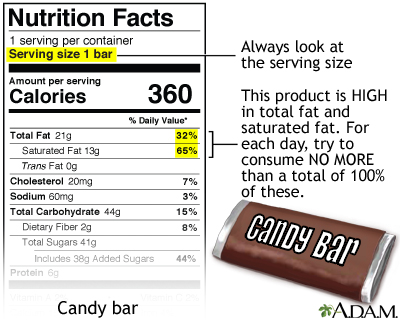
Food Label Guide for Candy


Chat with your medical care supplier about how to eliminate how much fat you eat. Your supplier can allude you to a dietitian who can assist you with more deeply studying food sources and assist you with arranging a sound eating routine. Ensure you have your cholesterol levels checked by a timetable your supplier gives you.


Elective Names

Cholesterol - dietary fats; Hyperlipidemia - dietary fats; computer aided design - dietary fats; Coronary conduit infection - dietary fats; Coronary illness - dietary fats; Anticipation - dietary fats; Cardiovascular sickness - dietary fats; Fringe corridor infection - dietary fats; Stroke - dietary fats; Atherosclerosis - dietary fats


.

.

.

Monday, October 16, 2023

The Structure and Function of Proteins


The Structure and Function of Proteins

Proteins are essential macromolecules in living organisms, playing a wide range of crucial roles in the structure, function, and regulation of cells and tissues. They are made up of long chains of amino acids and are involved in a multitude of biological processes. Understanding the structure and function of proteins is fundamental to comprehending the mechanisms of life. Here's an overview of the structure and function of proteins:

Structure of Proteins:

Proteins have a hierarchical structure, comprising primary, secondary, tertiary, and quaternary structures.

  1. Primary Structure: This is the linear sequence of amino acids linked together by peptide bonds. The sequence of amino acids determines the protein's unique identity and function.

  2. Secondary Structure: Secondary structure refers to the local folding patterns within the protein chain. The most common secondary structures are alpha helices and beta sheets. These structures are stabilized by hydrogen bonds between amino acids' backbone atoms.

  3. Tertiary Structure: The tertiary structure is the three-dimensional arrangement of the entire protein molecule. It results from interactions between amino acid side chains (R groups) and includes various forces like hydrogen bonds, disulfide bridges, hydrophobic interactions, and electrostatic interactions. The tertiary structure defines the protein's overall shape and, to a large extent, its function.

  4. Quaternary Structure: Some proteins are composed of multiple polypeptide chains, and the quaternary structure describes their arrangement and interaction. Hemoglobin is an example of a protein with quaternary structure, consisting of four subunits.

Function of Proteins:

Proteins perform a wide array of functions in living organisms, including:

  1. Enzymes: Enzymes are proteins that act as biological catalysts, facilitating chemical reactions in cells. They increase the rate of reactions by lowering the activation energy required.

  2. Structural Proteins: These proteins provide support and shape to cells and tissues. Examples include collagen in connective tissues and keratin in hair and nails.

  3. Transport Proteins: These proteins, like hemoglobin, transport molecules such as oxygen and nutrients through the bloodstream.

  4. Hormones: Hormonal proteins act as signaling molecules, regulating various physiological processes. Insulin, for instance, regulates blood sugar levels.

  5. Antibodies: Antibodies are immune system proteins that recognize and neutralize foreign substances like viruses and bacteria.

  6. Motor Proteins: Motor proteins, such as myosin, are responsible for muscle contraction and intracellular transport.

  7. Receptors: Receptor proteins are involved in cell signaling and allow cells to detect and respond to external signals.

  8. Channels and Transporters: Proteins like ion channels and transporters facilitate the movement of ions and molecules across cell membranes.

  9. Storage Proteins: Proteins like ferritin store essential molecules, such as iron.

  10. Regulatory Proteins: These proteins control various cellular processes, including gene expression, by acting as transcription factors.

  11. Defense Proteins: Proteins like lysozyme protect against microbial infections.

The diverse functions of proteins stem from their unique three-dimensional structures, which are determined by the amino acid sequence. Changes in the protein's structure can lead to dysfunction and diseases, highlighting the importance of understanding protein structure and function in both basic biology and medical research

Sunday, October 15, 2023

What are the best protein sources? How much protein is too much?


What are the best protein sources? How much protein is too much?


The best protein sources are those that provide high-quality protein along with other essential nutrients. Here are some of the top protein sources:

  1. Lean Meats: Lean cuts of beef, pork, and poultry are excellent sources of protein. Chicken breast, turkey, and lean cuts of red meat are good options.


  2. Fish: Fatty fish like salmon, mackerel, and sardines provide protein along with heart-healthy omega-3 fatty acids.


  3. Eggs: Eggs are a complete protein source, providing all the essential amino acids. They are versatile and can be prepared in various ways.


  4. Dairy: Dairy products such as Greek yogurt, cottage cheese, and milk are rich in protein. They also provide calcium and other essential nutrients.


  5. Legumes: Beans, lentils, and chickpeas are plant-based sources of protein. They are also high in fiber, making them a nutritious choice.


  6. Tofu and Tempeh: These soy-based products are popular among vegetarians and vegans. They are complete protein sources and can be used in a variety of dishes.


  7. Nuts and Seeds: Almonds, peanuts, chia seeds, and sunflower seeds are good sources of protein and healthy fats.


  8. Quinoa: Quinoa is a complete plant-based protein source and is high in fiber and various vitamins and minerals.


  9. Protein Supplements: Protein powders and shakes can be convenient sources of protein, especially for athletes and people with high protein requirements.

As for how much protein is too much, the recommended daily intake of protein can vary depending on factors like age, sex, activity level, and individual health goals. In general, most adults should aim to get around 10-35% of their daily caloric intake from protein. The Dietary Reference Intake (DRI) suggests a daily protein intake of 0.8 grams of protein per kilogram of body weight for the average sedentary adult. However, athletes and individuals engaged in intense physical activity may require more.

Excessive protein intake is generally considered to be more than 2.0 grams of protein per kilogram of body weight. Consuming significantly more protein than your body needs over a long period may not be necessary and can put additional stress on your kidneys. It's essential to balance your protein intake with a well-rounded diet that includes carbohydrates, fats, and other nutrients for overall health. If you have specific dietary or health concerns, it's advisable to consult with a healthcare professional or a registered dietitian for personalized guidance.

Blog Thoughts: A definitive Rundown of Blog Entry Thoughts for Each Specialty

Business Blog Thoughts The Fate of Remote Work: Advantages and disadvantages. Startup Examples of Overcoming Adversity: Illustrations to Lea...